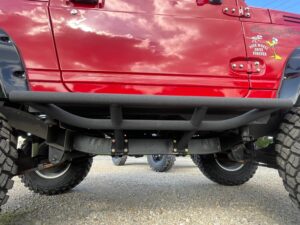
A lifted vehicle looks more aggressive and can feel more capable off-road, but whether you actually need a lift depends heavily on where you drive and how you use your vehicle.
If you raise the ride height without a clear purpose, ride comfort can suffer, and you may run into inspection or safety issues. This is one of the hardest calls to make, especially for first-time customizers.
In this article, we’ll cover:
- How lift-ups work and what they’re for
- How your off-road capability changes
- When a lift actually makes a difference
- Things to watch out for and downsides
We’ll explain the above in a clear, easy-to-follow way.
At Garage Red Line, we have a lead builder with wins in competitions like TRY-X and XCT Dual, along with staff who have competed as well.
Our off-road specialists understand real-world trail driving and propose the best setup based on your vehicle and driving environment.
If you want practicality—not just looks—or you don’t want to mess up your first lift, use this guide as a solid basis for deciding your build.

Garage Red Line(ガレージレッドライン)では費用感のご相談だけでも承っております。
豊富な知識と経験をもとに専門スタッフがお客様に最適なプランをご提案。
どんなことでも構いませんので、まずはお気軽にお問い合わせください。
監修者
(株)STAY GOLD:Garage Red Line 代表 久保田 将平

Garage Red Line創業者。幼少期から車に親しみ、板金・カスタムの現場で技術を磨く。
2018年に独立し、現在は自社で多様なカスタム・整備に対応。TRY-XやXCT-Dualをはじめとしたレース・クロカン優勝経験を活かし、実践的な知識で監修を担当。
現在もドライバーとして活動している。
久保田 将平
この記事を書いた人
記事ディレクター/ライター/フォトグラファー・清水

カメラの専門学校で撮影技術と作品制作を学んだのち、車業回で勤務しながらアウトドア撮影を中心に活動。
現在はGarage Red Line Styleをはじめとしたさまざまな媒体で執筆。
初心者にも伝わる構成づくり・検索意図設計・文章作成を活かし、企画・構成・執筆・改善まで一貫して担当している。
清水
What Is a Lift-Up? Basic Mechanisms and Purpose
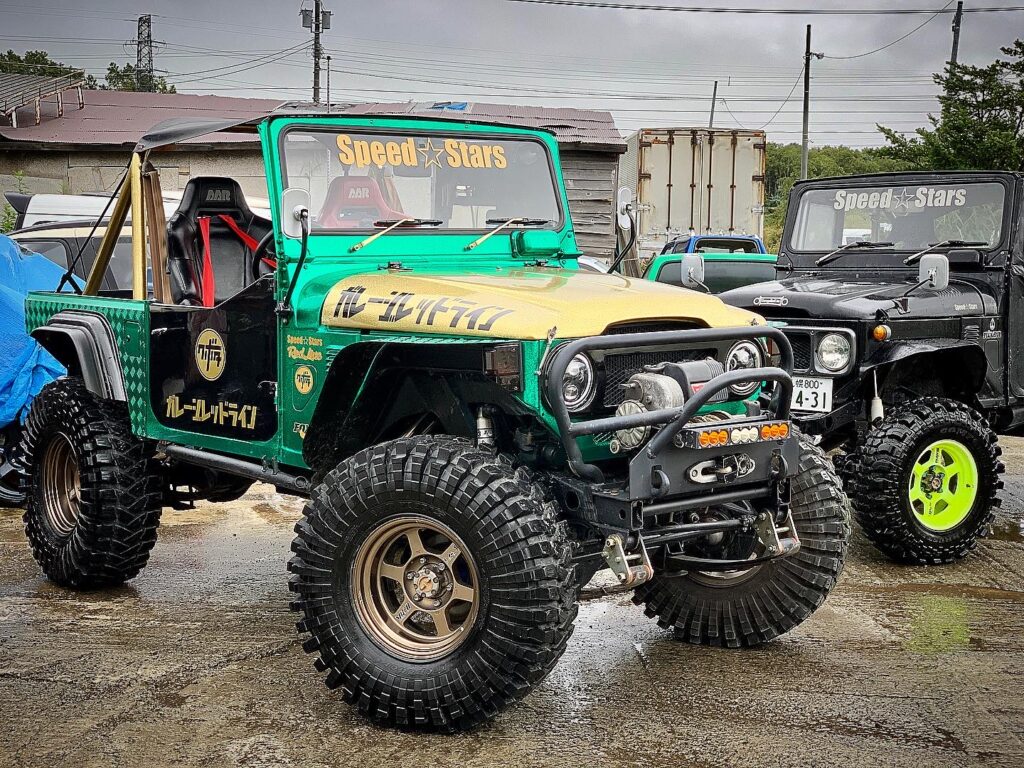
A lift-up is a modification that increases the clearance between the vehicle and the ground (ground clearance).
This is typically achieved through a suspension lift or a body lift.
In this section, let’s take a look at how lift-ups work and why people do them.
How Lift-Ups Work (Suspension Lift / Body Lift)
- Suspension lift: Raises the whole vehicle by replacing suspension components
- Body lift: Adds spacers between the frame and body to raise the body only
Lift-ups generally fall into two categories: “suspension lifts” and “body lifts.”
The most common is the suspension lift. It changes the suspension hardware itself—coil springs, leaf springs, shackles, and other components—to raise the entire vehicle.
Because it changes suspension travel and damping characteristics, it also affects ride comfort, off-road capability, and stability in corners .
If your goal is improved off-road performance, this is usually the route to take.
A body lift, on the other hand, raises only the body by inserting spacers between the frame and the body.
Since you don’t modify the suspension, it can be more cost-effective and is an easy way to add visual impact.
However, it does not increase the vehicle’s lowest point, so it doesn’t directly translate into better off-road clearance—this is the key characteristic.
Depending on the vehicle, you may need to extend the steering shaft and wiring, so the work requires technical expertise.
Because each method has clear pros and cons, it’s essential to choose the right approach based on your goal.
At Garage Red Line, professionals recommend the best method based on your driving scenarios and your specific vehicle platform.
Why People Lift Their Vehicles
The main reasons for a lift-up fall into three categories: “improving off-road capability,” “changing the look,” and “running larger tires.”
First, off-road capability: increasing ground clearance helps you avoid underbody contact, significantly reducing the risk of getting stuck on rocks, ledges, and deep ruts.
It also improves approach and departure angles, expanding where you can actually go off-road.
Next, aesthetics.
A lift emphasizes the rugged 4×4 vibe and creates a presence that’s clearly different from stock, so many people choose it mainly for appearance.
With SUVs and pickups especially, a lot of owners enjoy the silhouette change that comes with added ride height.
And third, it enables you to fit larger off-road tires.
By avoiding fender contact and gaining room for higher-traction tires, you can improve traction and maintain more stable control on rough terrain.
In short, lift-ups deliver benefits across three axes: “capability,” “appearance,” and “hardware.”
Why Garage Red Line Is Chosen for 4×4 Builds
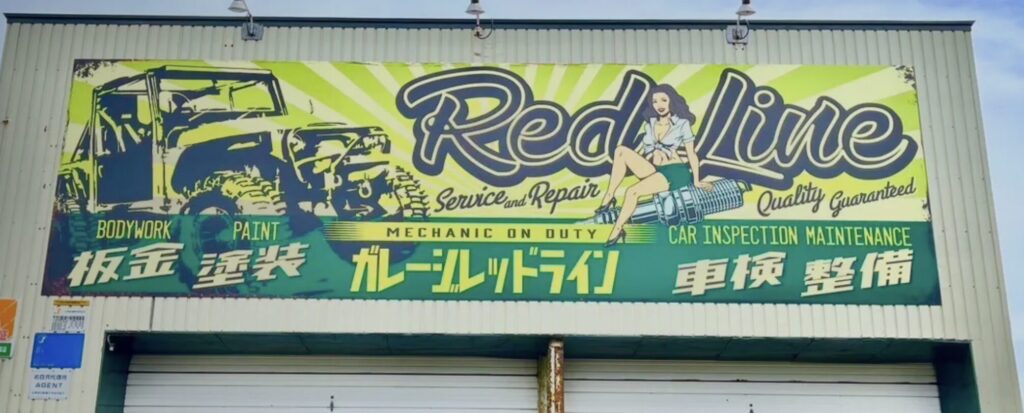
Garage Red Line (Garage Red Line), located at 644-2 Okadama-cho, Higashi-ku, Sapporo, is a community-focused shop trusted by many drivers for comprehensive inspection, maintenance, and bodywork services.
At Garage Red Line, we maintain strict service standards tailored to each vehicle model and a maintenance workflow that cares for the details.
Even if it’s your first battery replacement, you’ll find an environment you can trust, plus advice tailored to Sapporo’s climate conditions.
In this section, we’ll share why customers keep choosing us among many repair shops.
Custom Build Proposals by Real Off-Road Competitors
How much lift you need, which suspension setup is best, and what tire size is truly appropriate.
Lift-ups are easy to get wrong if you judge only by “looks.”
Garage Red Line’s strength is that your build is handled by professionals who have proven results in actual off-road competition.
Our representative, Kubota, has won numerous events including TRY-X and XCT Dual, and also organizes off-road events and trail-run meetups.

All of our staff members have competition experience as well—our team knows what actually happens out on the trail.
Based on that experience, we propose the best setup considering your driving scenarios × your vehicle’s platform characteristics × Sapporo’s conditions (snow and ice) × your budget .
We support building a 4×4 you can enjoy for the long haul, balancing safety and off-road capability.
One-Stop Support Through After-Maintenance
After a lift-up, alignment and suspension checks are essential.
At Garage Red Line, we’re set up to handle everything consistently—from regular inspections after your build, to consumable replacements, to diagnosing abnormal noises.
Rather than “build and done,” we help you maintain a 4×4 you can drive with confidence for years.
If anything feels off, you can consult us right away—peace of mind that comes with a specialized shop.
Easy Contact via the Inquiry Form
At Garage Red Line, you can reach us not only by phone but also via a dedicated inquiry form.
It’s totally fine to reach out even if you’re still at the “not sure whether to replace it” or “I want you to check my battery condition” stage.
You can check availability before visiting, so even busy people can book smoothly.
From quick questions to a formal job request, we’ve created an easy environment for communication.
Garage Red Line(ガレージレッドライン)では費用感のご相談だけでも承っております。
豊富な知識と経験をもとに専門スタッフがお客様に最適なプランをご提案。
どんなことでも構いませんので、まずはお気軽にお問い合わせください。
If You’re Nearby, Come Visit Garage Red Line!
Address
〒007-0880
644-2 Okadama-cho, Higashi-ku, Sapporo, Hokkaido (Garage Red Line)
Phone
📞011-788-9924
Fax
📞050-3737-3274
Mobile
📞080-1867-1073
Business Hours
Weekdays 10:00–19:00 / Saturday 10:00–18:00
Closed
2nd Saturday, Sundays, and public holidays
Payment Methods
Cash / Credit card / QR code payments / Various loan options
When Do You Actually Need a Lift?
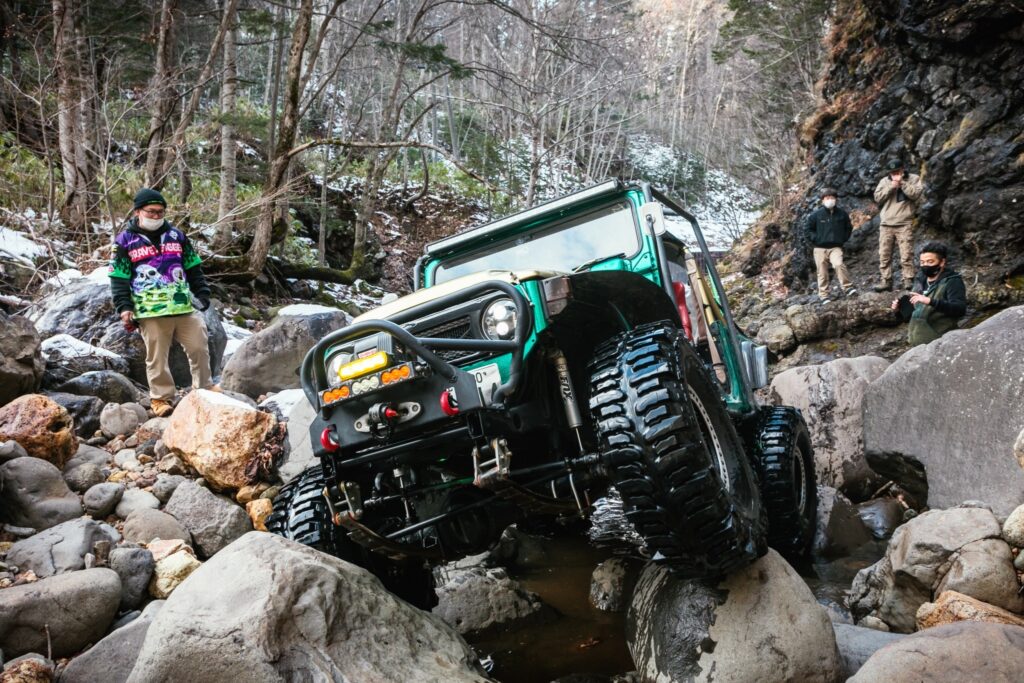
A lift makes the biggest difference in environments like the following.
① Serious Off-Roading on Rocks and Mud
- For serious off-roading, the right amount of lift is effective
- More usable travel increases line choice freedom and significantly improves capability
- It also helps maintain traction, and “proper ride height” is considered important even at the competition level
In serious off-road conditions—rocky terrain, mud, and continuous deep ruts—the benefit of a lift becomes the clearest.
On uneven ground with lots of ledges, angles like the approach angle and departure angle—your “climb and descent angles”—have a major impact on capability.
If you keep a low ride height, the bumper and floor are more likely to contact the ground, which can damage the vehicle and cause you to get stuck.
By securing ground clearance through a lift, you reduce the chance of hitting obstacles with the underbody or differential, and you gain far more freedom in picking your line.
That means you can push forward more confidently over rocky steps and jagged surfaces.
Also, when shock and spring travel are optimized, the tires keep better contact with the surface, making it easier to maintain traction even on slippery sections.
“Proper ride height” is a key factor in off-road competition as well. If you plan to tackle real rough terrain, the advantages of lifting are significant.
② Recreational Driving: Riverbeds, Snowy Roads, and Forest Roads
- It helps prevent underbody contact and greatly reduces the chance of getting stuck on riverbeds, forest roads, and snowy routes
- Even a few centimeters can be the difference between “moving” and “not moving”
- It stabilizes vehicle posture on cars that squat in the rear when loaded, improving confidence during leisure trips
Lift-ups can also be effective in everyday leisure situations, such as forest roads to campgrounds or approaches to riverbeds.
These routes aren’t as smooth as pavement, and they often have small steps and dug-out ruts. With stock ride height, it’s not uncommon to scrape the belly or hit the skid plate/undercover.
By gaining extra clearance, you’re better able to handle varied surfaces and significantly reduce the risk of getting stuck.
Another benefit is stability when the vehicle is heavily loaded—camp gear can make the rear sag, and family outings often increase payload. A lift can help keep the stance more composed.
You can keep on-road comfort while gaining the “expanded range” to drive unpaved routes with more confidence.
③ When You Want to Run Larger Tires
- 35-inch-class tires have a high risk of rubbing, so you need enough clearance—often requiring a lift
- Larger tires can greatly improve traction, obstacle clearance, and visual impact
- Because effective gearing changes, you may need to review gear ratio and braking performance
If you want to run serious off-road tires or 35-inch-class tires, a lift-up is often close to mandatory.
Because larger tires have a bigger overall diameter, keeping stock ride height increases the chance of rubbing on the fenders, inner liners, or body mount areas, and the tires can contact the body while driving.
This is even more critical off-road where suspension movement is larger—insufficient clearance can become a safety issue.
By creating more room in the wheel wells, you can avoid tire rub and fully take advantage of what larger tires offer.
Larger tires increase contact area, making it easier to generate traction, and they also improve your ability to climb over obstacles.
They also add visual presence, making the vehicle feel even more like a true 4×4.
That said, because larger tires effectively change your gearing, you may need to reassess gear ratio and braking performance depending on the setup.
At Garage Red Line, our experienced staff propose builds that balance safety and performance, based on the appropriate tire size for your specific vehicle.
Downsides and Things to Watch Out For
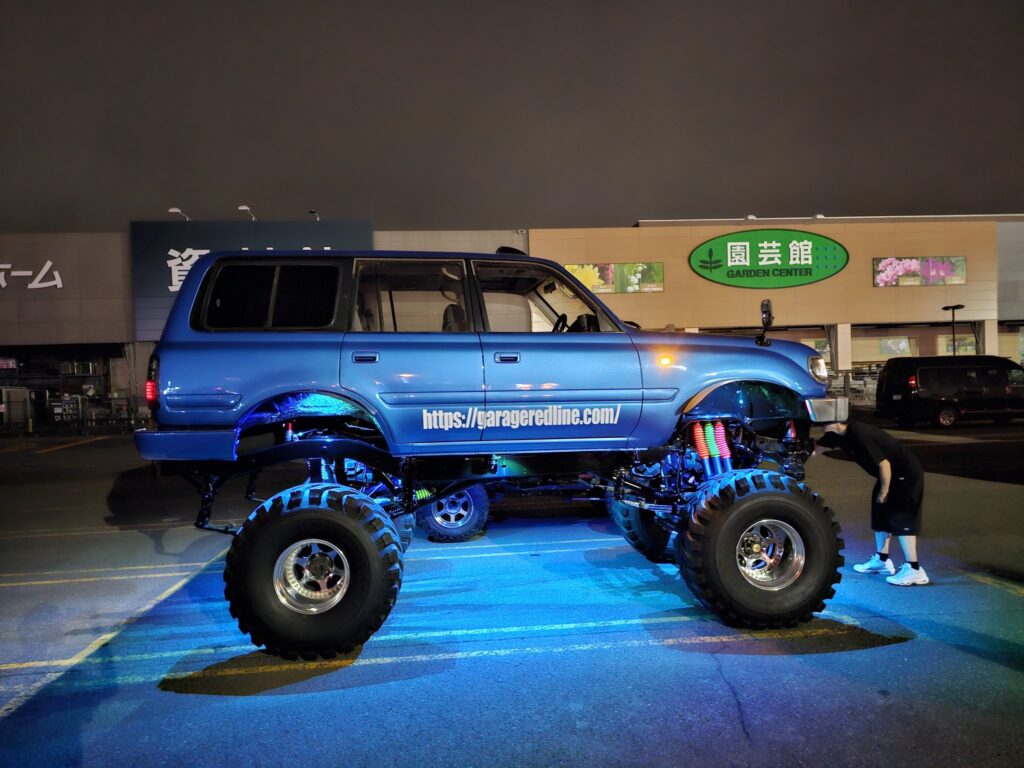
In this section, we’ll cover the disadvantages and cautions of lift-ups.
① Costs Can Extend Beyond the Suspension
- As the center of gravity rises, body roll increases in corners, so proper correction components are needed
- Garage Red Line recommends the “proper lift height” and supports balancing capability with budget
While a lift improves off-road capability, you should understand that it can also affect ride comfort depending on the setup.
Raising ride height also raises the center of gravity, increasing body roll in corners, so correction components are recommended.
Depending on the vehicle, the suspension travel balance can shift, and compression/rebound movement may become uneven.
As the number of correction components increases beyond the suspension itself, total build cost rises accordingly.
At Garage Red Line, we can also propose the “proper lift height” based on your vehicle’s characteristics and usage environment.
② Pay Attention to Inspection and Safety Regulations
- A lift can affect vehicle inspection and compliance; if you exceed legal limits, you may need a structural change inspection/registration
- Because vehicle designs vary, even “a few centimeters” can potentially violate standards
One thing you must consider when lifting a vehicle is compliance with inspection and safety regulations.
A major ride-height change comes with more legal constraints than you might expect. If you proceed without knowing them, you can run into issues like “it won’t pass inspection” or “it required a structural modification registration.”
Also, depending on suspension layout and frame design, even a small change in ride height can violate the standards.
Inspection items can be surprisingly detailed—bumper position, fender clearance, headlight height, and more—making it difficult for owners to judge on their own.
You should also understand the risk of being treated as an “illegal modification” without realizing it.
Before you commit, it’s important to determine whether structural modification procedures are required and what lift height remains within legal limits.
At Garage Red Line, we propose compliant, safe build plans based on inspection standards and each vehicle’s characteristics, and we also support inspection-related consultations after installation.
To keep enjoying your vehicle safely for years, pre-checks are essential.
③ Effects on Fuel Economy and Tire Wear
- More ride height and larger tires can increase aerodynamic drag, weight, and rolling resistance, making fuel economy worse
- If you don’t correct suspension angles, alignment can drift and uneven wear becomes more likely
- On icy roads, tire wear directly impacts safety, so regular inspections are essential
While lift-ups are attractive for capability and looks, they can affect fuel economy and tire wear.
As ride height increases, aerodynamic drag rises and vehicle posture changes.
As a result, engine load can increase slightly. Compared to stock, fuel economy may worsen, and drivers who mainly commute in town may notice the change.
When combined with larger tires, overall diameter and weight increase, and depending on the tread pattern, rolling resistance can rise as well.
That adds load during acceleration, making the impact on fuel economy more noticeable.
Also, if suspension angles aren’t corrected, alignment can drift more easily, increasing the risk of uneven wear such as inner wear or outer wear.
Even small alignment errors can shorten tire life. Skipping post-lift adjustments can add unnecessary cost over time.
In Hokkaido, where winter driving often means icy roads, tire wear directly affects safety—regular checks are crucial.
At Garage Red Line, we also support proper tire selection for ride height changes, proposing setups that keep a healthy balance between fuel economy, tire life, and safety.
When you consider post-build maintenance as part of the plan, you can enjoy a safe, reliable car life for much longer.
What to Check Before Lifting

For typical campgrounds and light forest-road use, stock ride height is often more than enough.
Many modern SUVs and crossovers already have 180–200 mm or more of ground clearance from the factory, which is sufficient for light off-road driving.
There’s nothing wrong with lifting for looks, but make sure you also run the proper correction components.
① Decide the Level of Terrain You Want to Drive
Before considering a lift-up, the first thing to decide is your 기준: “What level of roads/trails do I want to drive?”
“Off-road” can mean anything from flat dirt forest roads, to deep ruts on a riverbed, to mogul sections and rock crawling—and the required ride height changes completely depending on that.
If you’re mainly driving mild unpaved roads to a campground, factory ride height is often enough. If you’re focused on snowy roads, even a few centimeters of lift can feel beneficial.
On the other hand, if you plan to drive rocky terrain with lots of ledges, you’ll need a more serious lift that includes strengthening the entire suspension and dialing in the correct setup.
② Understand Your Budget and Required Parts
A lift-up can look like a simple “raise the ride height” job, but in reality the required parts and labor vary widely—and so does the cost.
For a mild lift, coil spacers or a few short parts may be enough. But a full suspension lift often requires shocks, springs, control arms, sway bar correction parts, and more.
Because the total cost changes significantly depending on the method, getting an estimate in advance is essential.
If you’re combining the lift with larger tires, additional work often comes up—wheel sizing changes, fender rub countermeasures, alignment adjustments—so budgets can expand beyond what you expected.
If it’s your first lift-up, it helps to understand “what’s the minimum required” versus “what becomes optional.”
③ Balance It With How You Use the Vehicle Day to Day
When deciding on a lift-up, it’s important to use “how you drive day to day” as your baseline.
If commuting, shopping, and school drop-offs make up most of your driving, lifting too much can make the downsides feel more obvious than the benefits.
You may notice changes in cornering stability and increased movement over bumps—practical usability can be affected.
In snowy regions, extra height can help in some situations, but a higher center of gravity can also make the vehicle more sensitive to crosswinds, so it’s not always true that “higher is better.”
If you often carry family members, ride comfort and safety become even more important—so you’ll want to judge the balance between your goals and daily use.
Summary: Whether You Need a Lift Depends on Your Goal
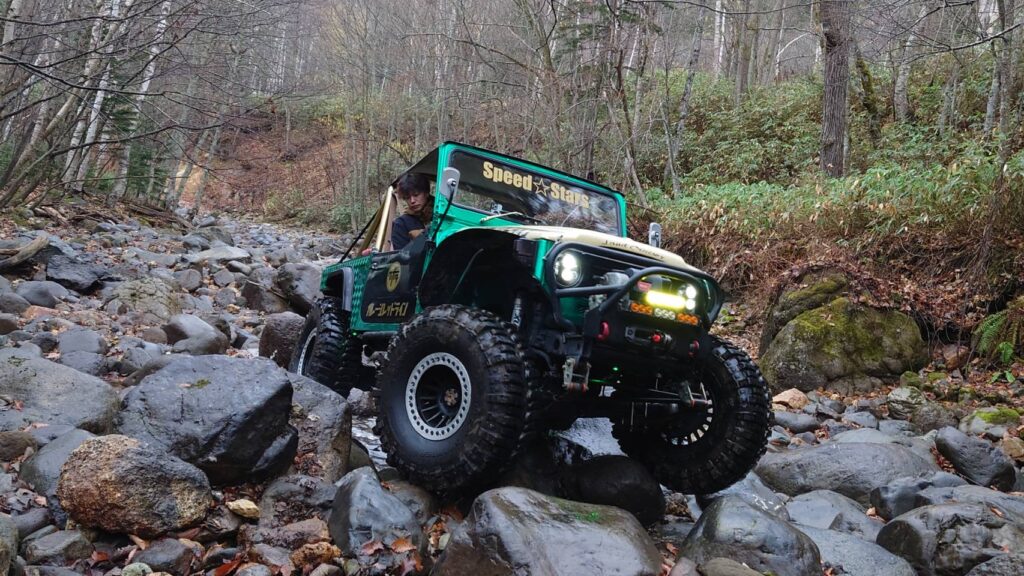
A lift-up is an appealing modification that can boost both visual presence and off-road capability, but whether you truly need it depends largely on “what kind of roads you want to drive” and “how much off-roading you actually plan to do.”
For riverbeds and forest-road leisure driving, a mild lift can be enough. If you mainly drive on pavement, you may be perfectly happy staying at factory ride height.
On the other hand, if you want to clear serious rock sections and deep ruts—or you want to run larger tires—a lift’s benefits show up clearly.
Still, because it can affect inspection compliance, ride comfort, and fuel economy, it’s important to decide with both the benefits and cautions in mind.
Once your goal is clear, you can move toward a build without waste—and you’re less likely to regret it later.
At Garage Red Line, we carefully listen to your driving needs and propose the optimal lift height based on your vehicle platform and real usage.
If you’re thinking, “I’m not sure what lift I should do,” talking to pros like us can make the direction much clearer.