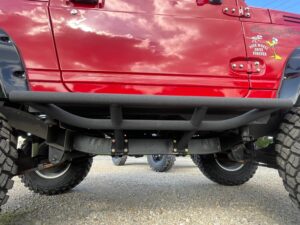
Rock sliders are parts designed to protect the vehicle’s sides—especially around the rocker panels/side sills—on forest roads, snowy roads, and rocky terrain.
They’re also a part that tends to raise a lot of questions—especially for first-timers—such as “Can I use them as a step?” or “Do I really need them?”
In this article, we’ll explain things in a beginner-friendly way and, from an installer’s perspective, break down “what these parts protect,” “when they’re effective,” and “the key points where installation and rust prevention make a real difference.”

Garage Red Line(ガレージレッドライン)では費用感のご相談だけでも承っております。
豊富な知識と経験をもとに専門スタッフがお客様に最適なプランをご提案。
どんなことでも構いませんので、まずはお気軽にお問い合わせください。
監修者
(株)STAY GOLD:Garage Red Line 代表 久保田 将平

Garage Red Line創業者。幼少期から車に親しみ、板金・カスタムの現場で技術を磨く。
2018年に独立し、現在は自社で多様なカスタム・整備に対応。TRY-XやXCT-Dualをはじめとしたレース・クロカン優勝経験を活かし、実践的な知識で監修を担当。
現在もドライバーとして活動している。
久保田 将平
この記事を書いた人
記事ディレクター/ライター/フォトグラファー・清水

カメラの専門学校で撮影技術と作品制作を学んだのち、車業回で勤務しながらアウトドア撮影を中心に活動。
現在はGarage Red Line Styleをはじめとしたさまざまな媒体で執筆。
初心者にも伝わる構成づくり・検索意図設計・文章作成を活かし、企画・構成・執筆・改善まで一貫して担当している。
清水
What Are Rock Sliders?
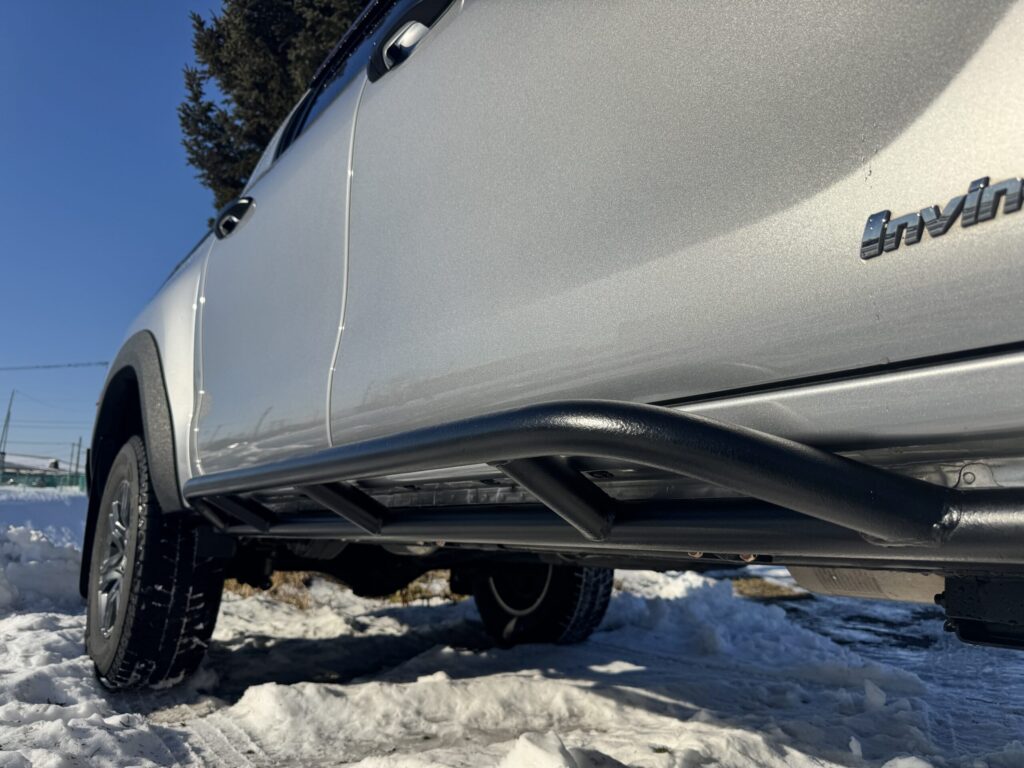
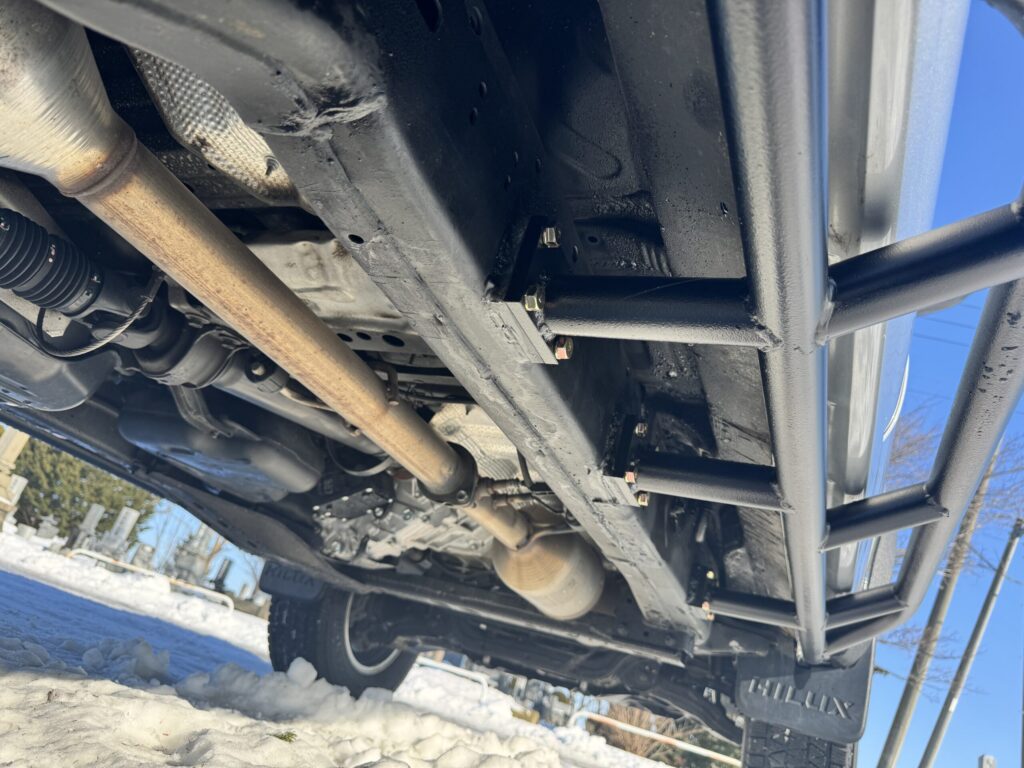
Rock sliders are protective parts built with the goal of shielding the vehicle’s sides, mainly around the rocker panels/side sills.
Depending on the mounting method (bolt-on vs. welded) and the rust-prep you do, overall satisfaction and long-term durability can vary greatly.
In regions like Hokkaido where road salt/de-icing chemicals are common, rust prevention matters far more than the appearance might suggest.
Also, regarding roadworthiness inspection compliance (shaken), it’s not something you can universally guarantee—the final call can vary depending on the inspector and the local jurisdiction in practice.
Next, we’ll walk through the roles of rock sliders, how they differ from side steps, how to think about whether you need them, and key points for installation and rust prevention.
Explaining the Three Main Roles of Rock Sliders
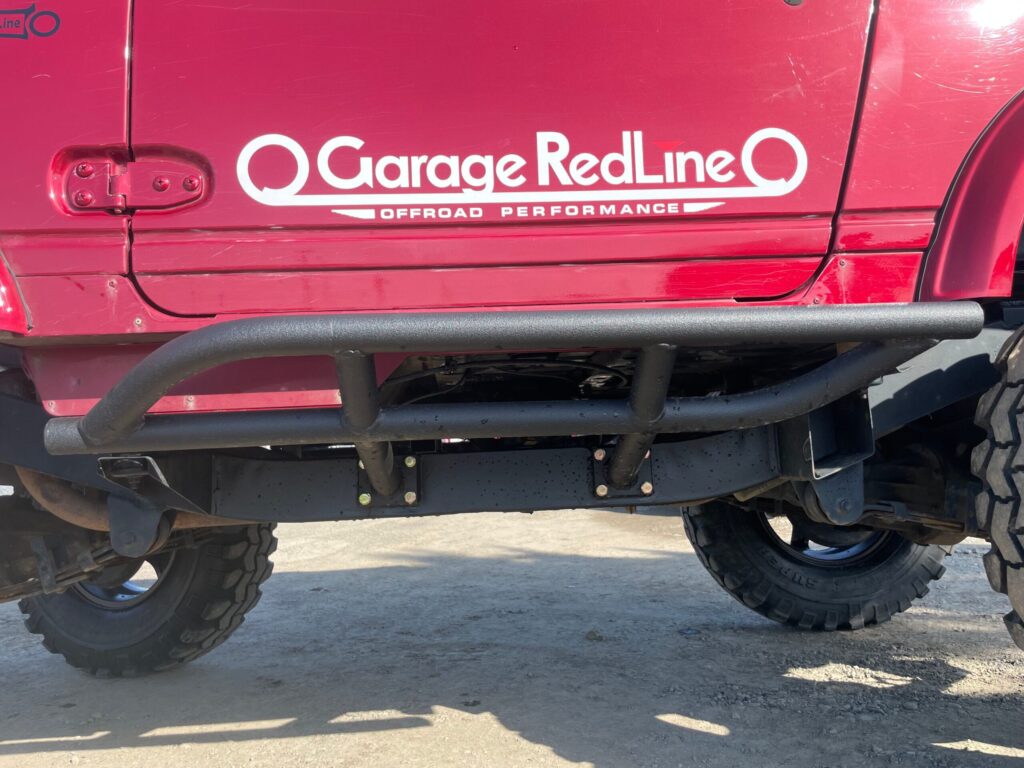
Role 1: Protecting the Rocker Panels/Side Sills
The most important role of rock sliders is protecting the rocker panels/side sills.
The rocker panels/side sills sit low along the lower edge of the vehicle’s sides. They’re structurally important because they support the door openings, but they’re also close to the ground—making them easy to hit on forest roads and snowy roads.
If the rocker panel/side sill gets dented, it’s not just cosmetic—it can lead to issues like the door gaps going out of alignment or the doors becoming harder to open and close.
And because the rocker panel/side sill is part of the vehicle’s structure, body repair can get expensive in the real world.
Ideally, you never hit anything—but in real off-road driving, there are situations where it’s hard to completely avoid contact due to ledges, ruts, or uneven terrain.
Rock sliders are designed for that reality: they contact obstacles before the rocker panel/side sill does, taking the hit and absorbing the damage.
With rock sliders installed, you can think of it as reducing damage during contact and lowering the risk of costly repairs.
Role 2: Step Function
Depending on the design, some rock sliders can be used as a step, but they’re not primarily made to assist entry and exit.
They’re designed first and foremost to protect the rocker panels/side sills, so it’s realistic to treat the step function as a secondary benefit.
Whether they work well as a step depends on factors like how far they stick out, their height, the size of the stepping surface, and whether there’s any anti-slip texture.
If the rock slider sits tight to the body, it’s not uncommon for it to be hard to place your foot on, or not very helpful for getting in and out.
On the other hand, some households choose rock sliders specifically to make entry and exit a bit easier—especially if they have small children or elderly passengers.
In that case, it’s important to confirm whether the design is intended from the start to be used as a step. Even if two products look similar, real-world usability can be very different.
When choosing rock sliders, thinking of them not as “guaranteed steps,” but as parts that may also work as a step when needed can help reduce any disappointment after installation.
Role 3: Protecting the Vehicle’s Sides
Rock sliders can also be expected to offer some protection to the vehicle’s sides.
Including daily use, they may help reduce body damage when something brushes or contacts the side, but they’re not a crash-safety device—these should be viewed as “insurance-like” equipment.
Because rock sliders are mounted structurally along the lower portion of the vehicle, they don’t cover the entire side. The area they can protect—and the force they can absorb—has limits.
Realistically, it’s best to think of them as something that may reduce minor side damage compared with having nothing installed.
Who Really Needs Rock Sliders? A Quick Fit Check
- You drive on forest roads, unpaved roads, or snowy roads
- You’ve scraped or hit the rocker panels/side sills or the lower edge under the doors before
- You’ve almost contacted the side on snowy ruts or frozen steps/ledges
- You worry about damage to the lower body and sides, and you end up driving overly cautiously
- Based on your vehicle’s size/shape, you feel like it’s easy to hit the sides
- You expect your off-road and outdoor use to increase in the future
- You want to minimize repair costs and the risk of bodywork as much as possible
- You value practicality and durability over looks
- You want to keep the vehicle long-term in areas affected by road salt/de-icing chemicals, such as Hokkaido
Rock sliders aren’t a must-have for every vehicle, but depending on how and where you drive, they can be very worthwhile equipment.
In particular, if you’ve already scraped the rocker panels/side sills or the area under the doors before, you’re more likely to appreciate the benefit of rock sliders.
If you frequently drive on forest roads, unpaved roads, or snowy roads, you can also say rock sliders are a good match.
The lower edge of the vehicle’s sides is hard to see from the driver’s seat, and even with care, it’s an easy spot to hit.
Also, depending on the vehicle, the rocker panel/side sill may sit low, or the wheelbase/body shape can make the sides easier to contact.
For those vehicles, rock sliders are effective in the sense that they reduce the anxiety of “I might hit it someday”.
On the other hand, if you mainly drive in town and stick to paved roads only, they may not be strictly necessary.
Rock sliders are best described as parts that suit people whose driving environment and usage actually justify them.
How They Differ from Side Steps
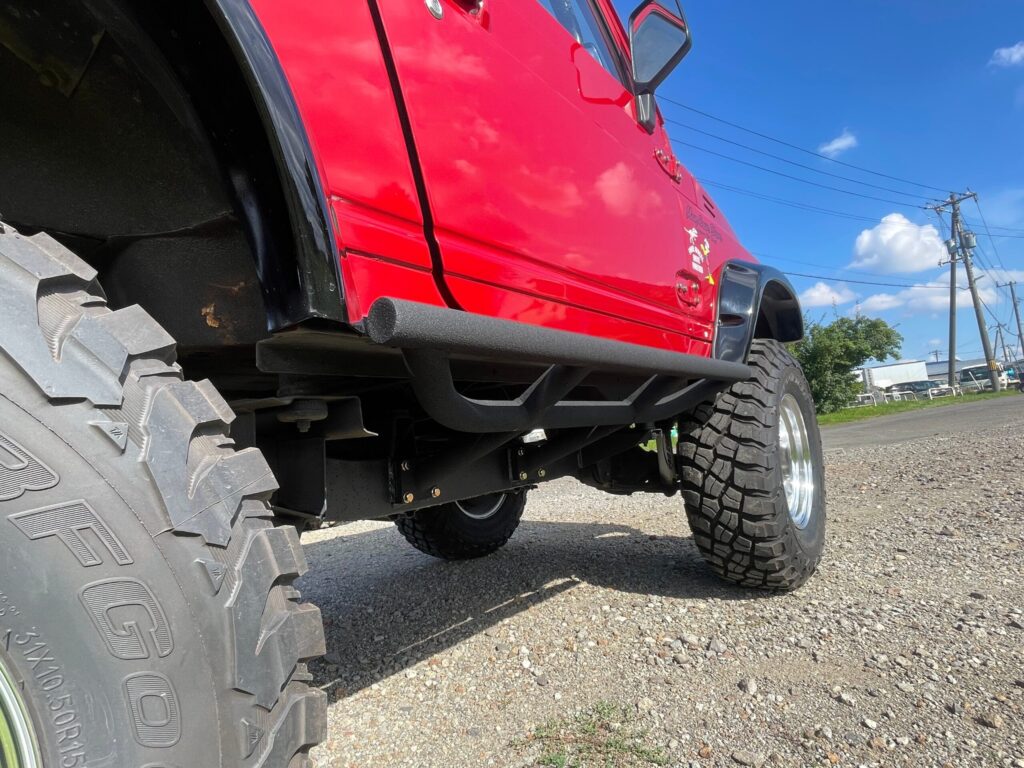
Side steps are parts whose primary purpose is making it easier to get in and out of the vehicle.
Especially on tall SUVs and 4WDs, they’re often chosen to improve everyday convenience for street use—making them a good fit for family vehicles and for commuting and shopping-focused use.
Many side steps are designed around the load of people stepping on them, and they’re not built on the assumption that they’ll support the vehicle’s weight.
As a result, they’re not suited for hitting rocks or ledges, and in off-road use, they can be damaged or bent.
Side steps are equipment intended to improve everyday usability.
When comparing them with rock sliders, it’s important to think based on differences in purpose and driving environment.
Mounting Types (Bolt-On vs. Welded) and Their Characteristics
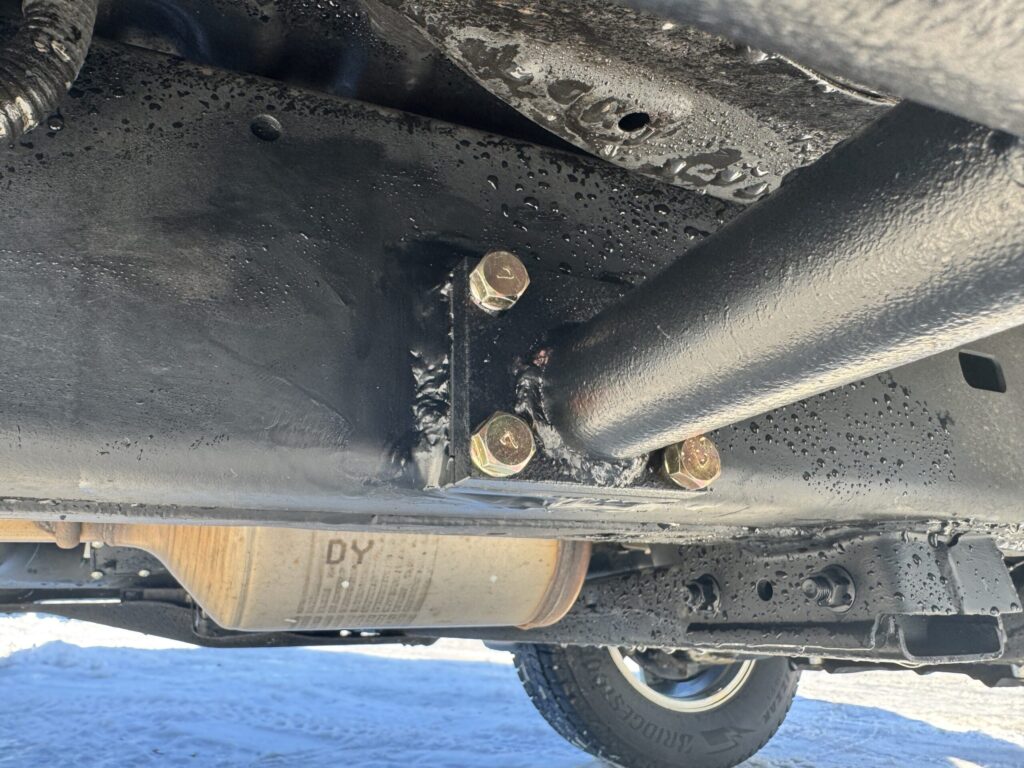
Bolt-On: Key Characteristics
Bolt-on is a mounting method where a base/bracket is welded to the frame, and then the slider is secured with bolts.
A major advantage is that it’s easier to remove the rock sliders for inspection, or to detach and reattach the main unit.
However, “bolt-on” doesn’t mean it’s an easy DIY installation.
You still need to check hole positions and clearances for interference while test-fitting on the actual vehicle.
Because frame shapes differ by vehicle, advance checks are essential.
At Garage Red Line, we can perform the optimal work for each vehicle based on extensive installation experience.
If you’re considering rock slider installation, feel free to contact us.
Garege Red Line(ガレージレッドライン) is happy to discuss rough pricing as well.
Based on extensive knowledge and experience, our specialist staff will propose the best plan for you.
No matter what it is, feel free to reach out first.
Welded: Key Characteristics
Welding is a method where the rock sliders are fixed directly to the frame.
While welding creates an integrated, solid finish, it’s not intended to be removable.
That’s why positioning accuracy and left-right symmetry have a major impact on the final result.
Also, for welded installations, how it’s treated during shaken (inspection) can vary depending on the inspector and jurisdiction.
Because it’s not something you can declare universally “pass/fail,” it’s important to discuss the mounting method in advance.
Garage Red Line also supports welded rock slider installations.
Even if you’re only at the “considering it” stage, feel free to reach out anytime.
Garege Red Line(ガレージレッドライン) is happy to discuss rough pricing as well.
Based on extensive knowledge and experience, our specialist staff will propose the best plan for you.
No matter what it is, feel free to reach out first.
Installation Process (Work Examples)
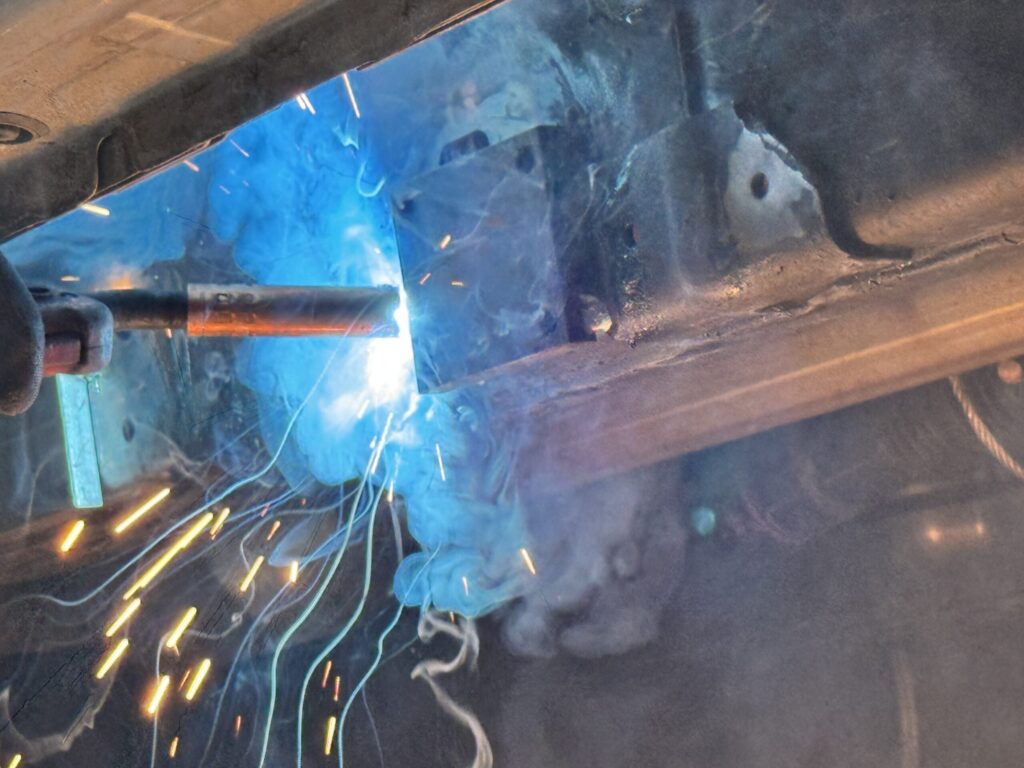
You can check rock slider installation examples in the articles below.
We hope you’ll find them helpful.
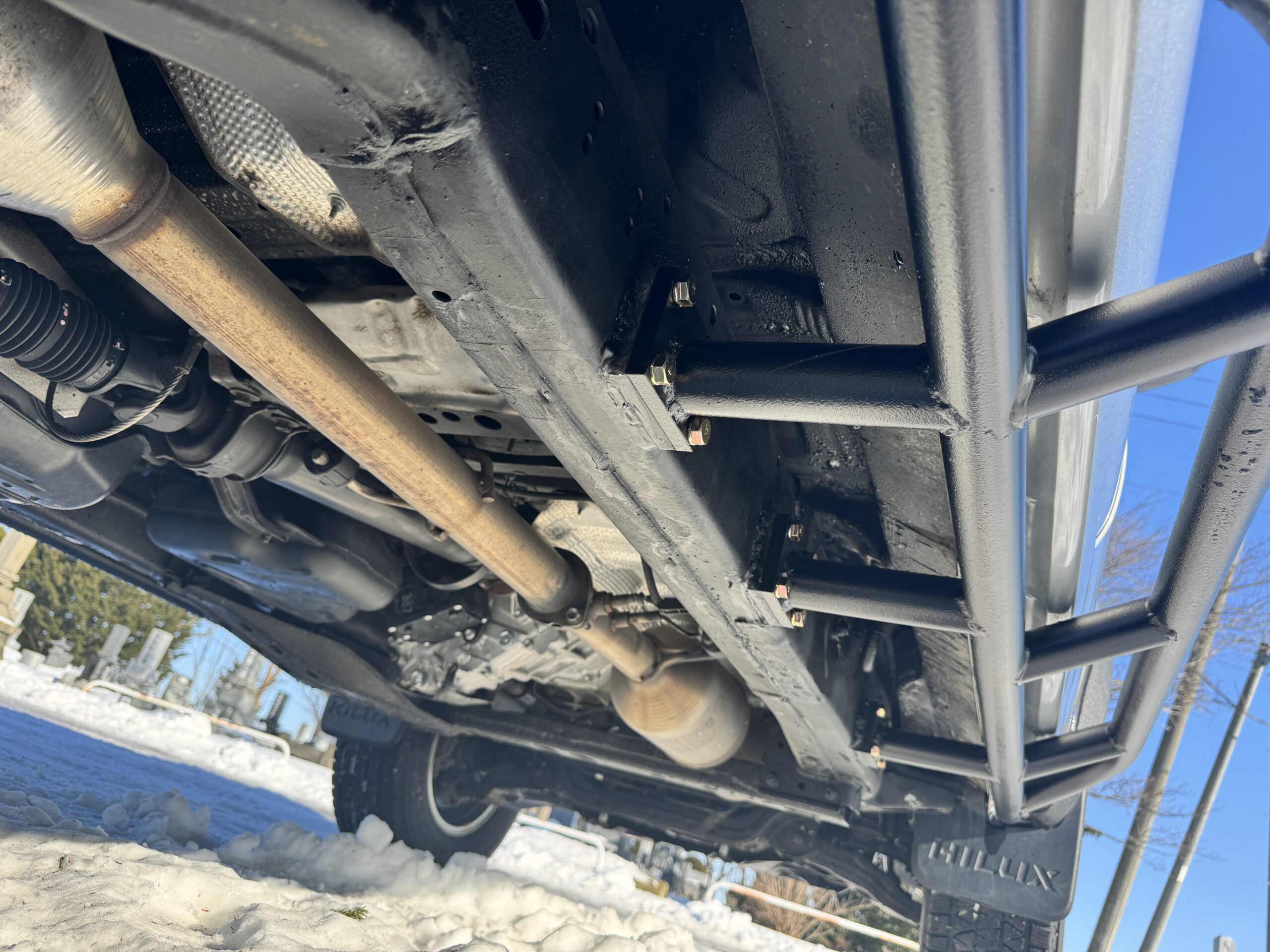
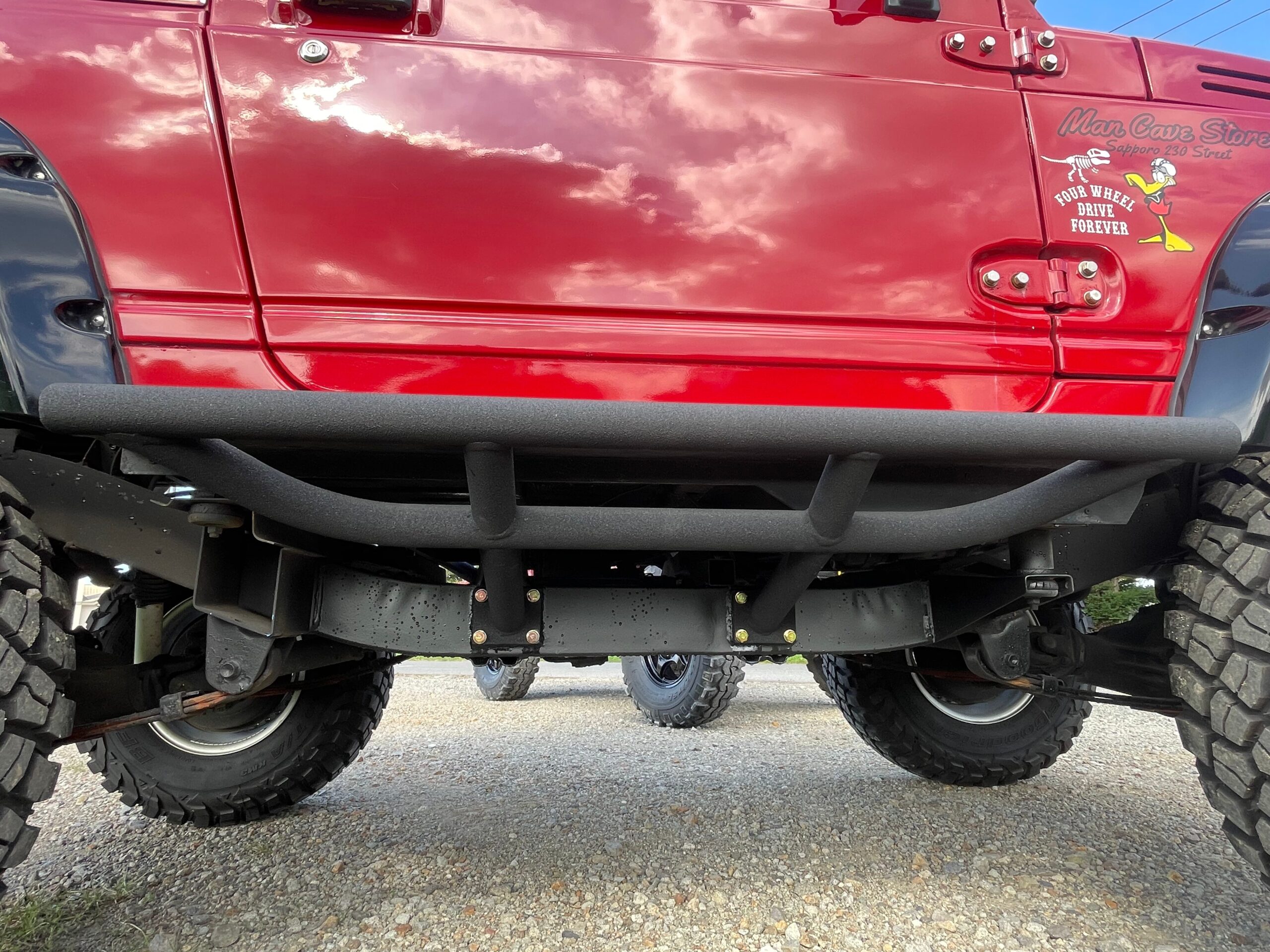
Rust Prevention and Coating
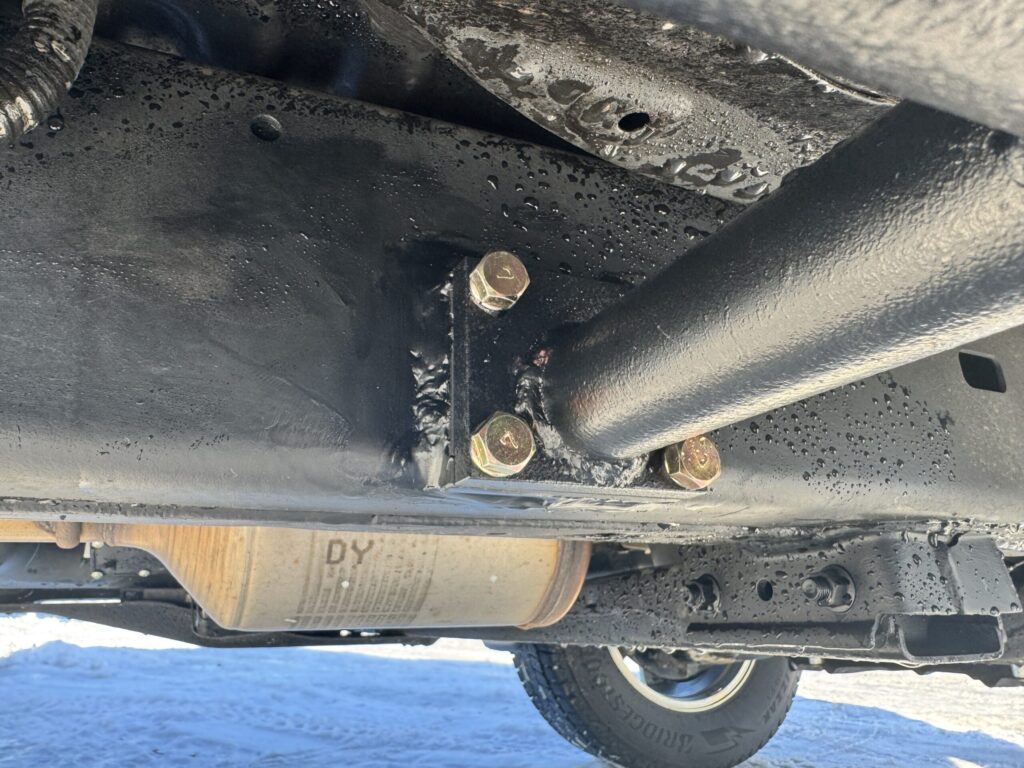
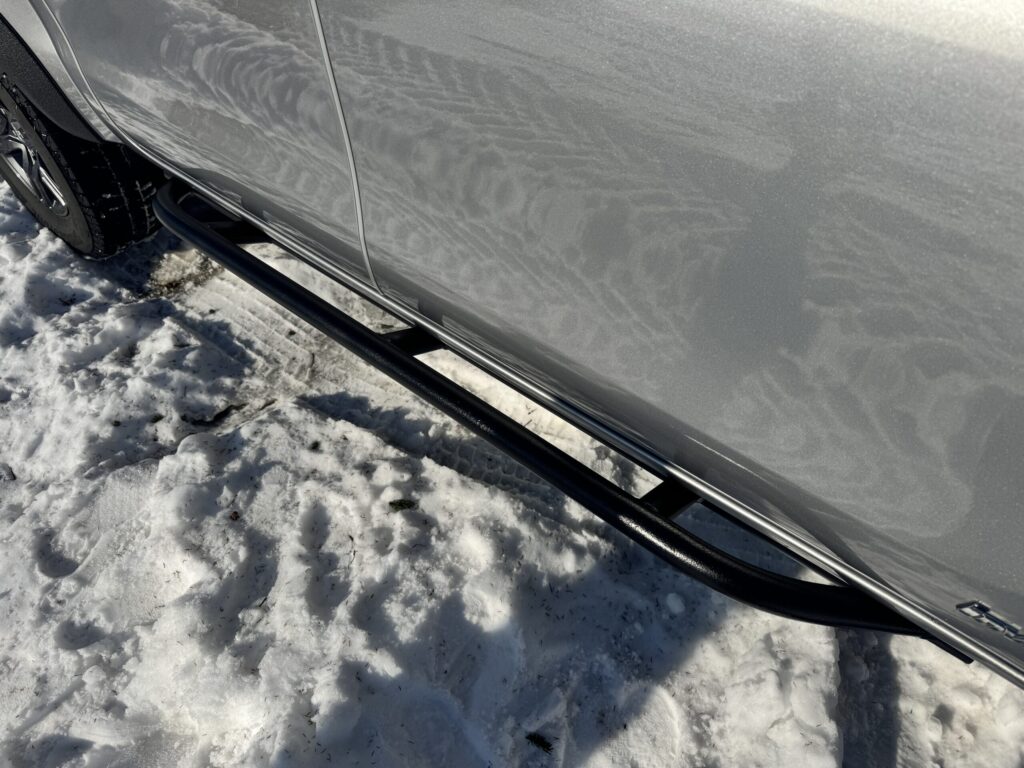
Rust Prevention Makes or Breaks Satisfaction
Rock sliders are parts where rust prevention is critical.
The reason is simple: rock sliders sit in a location that’s constantly exposed to water, mud, snow, and salt.
In Hokkaido, winter de-icing agents (potassium chloride) can cause rust to accelerate quickly if the rust-prep is insufficient.
Whether it’s bolt-on or welded, it’s important not to leave bare metal at drilled areas or weld points. Apply a rust inhibitor first, then finish properly.
It’s not just about “bolting it on”—how far you go with prep is what creates the long-term difference.
Because rock sliders are parts you use for years, you can say that careful rust prevention ultimately determines long-term satisfaction.
Topcoat / Final Finish
The final coating on rock sliders is not just about looks—it heavily affects how they’ll be used and how easy they are to maintain.
Rather than there being one “correct” coating, choosing what fits your environment is what matters.
A common option is chip guard (stone-chip) coating.
Chip guard has a rough texture and is resistant to small rock chips and scuffs, but it can hold onto dirt more easily.
If you frequently drive on forest roads or snowy roads, another approach is to assume they’ll get scratched and choose a coating that’s easy to touch up.
In many cases, it’s more realistic to repair as you go rather than trying to maintain a perfect appearance.
Instead of helping you decide based on looks alone, considering usage and repairability is the key to using them long-term.
How Much Does Installation Cost?
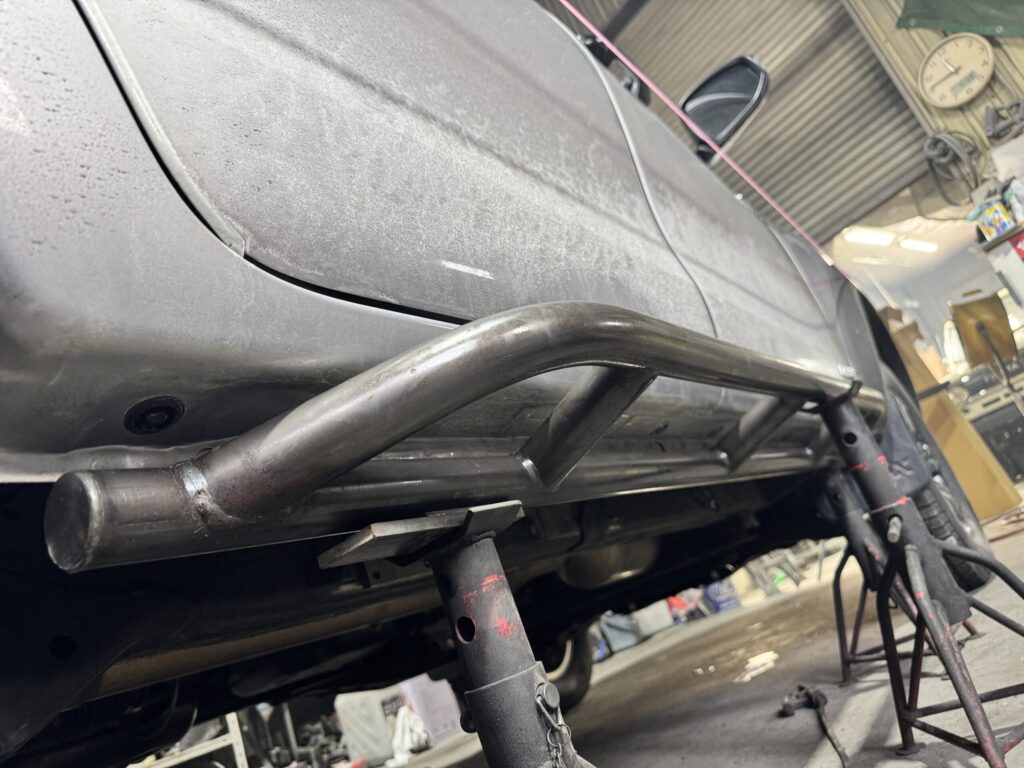
In reality, rock slider installation cost is not something that can be quoted as a single fixed price.
That’s because the workload can vary significantly depending not only on the vehicle and the product, but also on the mounting method and the scope of the work.
The biggest factor is the vehicle model.
Frame shapes and underbody layouts differ from vehicle to vehicle, and some cases require test-fitting and fabrication/modification.
Even with the same rock slider product, it’s not uncommon for labor time to change when the vehicle model changes.
The required steps also differ depending on whether you choose bolt-on or welded installation.
And of course, cost also moves up or down based on how far you go with rust prevention and coating.
Rather than comparing by looks alone, it’s important to confirm exactly what work is included.
For rock sliders, it’s more realistic to judge not by “expensive vs. cheap,” but by whether the contents justify the price for you.
For Rock Slider Installation in Sapporo, Leave It to Garage Red Line!
When it comes to installing rock sliders, it’s important not only to ask “Will they fit?” but also to sort out what mounting approach makes sense for your vehicle and usage.
At Garage Red Line, we start by confirming how you use the vehicle and your driving environment. Then we carefully explain what’s realistic—bolt-on or welded—along with mounting position, potential interference points, and how far rust prevention should go.
We also won’t simply declare “It will pass” or “It won’t pass” for shaken. Instead, we’ll organize the general thinking and key cautions to help you make an informed decision.
One of the benefits of a consultation is being able to understand the points where judgments tend to vary, ahead of time.
You don’t need to have everything decided before you visit.
Even if you’re at the stage of “I just want to hear more first,” feel free to reach out.
Garege Red Line(ガレージレッドライン) is happy to discuss rough pricing as well.
Based on extensive knowledge and experience, our specialist staff will propose the best plan for you.
No matter what it is, feel free to reach out first.
Frequently Asked Questions (FAQ)

- What parts of the vehicle do rock sliders protect?
-
Mainly, they protect the lower side area of the vehicle—especially around the rocker panels/side sills.
The rocker panels/side sills are important structural sections that support the door openings; if they get dented, it can affect not only appearance but also function and repair complexity.
Rock sliders are mounted in a position that makes contact before the rocker panels/side sills, with the goal of reducing damage.
For details on exactly what areas are protected, we explain it further in the main text under “What do they protect? Rocker panels/side sills / under the doors / around the rocker area.” - What’s the difference from side steps?
-
It’s easiest to understand them as parts with different purposes and design philosophies.
Side steps are mainly for making entry/exit easier, while many rock sliders are designed primarily to protect the rocker panels/side sills.
Even if they look similar, the strength concept and mounting position can differ depending on the product.
We organize the differences in use case in the “How They Differ from Side Steps” section. - Bolt-on or welded—what’s better?
-
It depends on how you use the vehicle and on the vehicle’s conditions.
Bolt-on setups are easier to remove for inspection and tend to offer good repeatability in installation.
Welded setups can deliver an integrated finish, but workmanship quality is critical.
Rather than comparing purely by strength, you should also consider maintenance and future usage.
For more, see “Mounting Types (Bolt-On vs. Welded).” - Will it pass shaken (inspection)?
-
We can’t universally state “yes” or “no.”
Judgment can vary depending on the rock slider’s shape, mounting method, and the vehicle’s condition, and ultimately you’re subject to the inspector and local jurisdiction.
That’s why it’s important to evaluate it by organizing the general thinking and key cautions first.
In the main text, we explain inspection-related considerations without making absolute claims. - How long does installation take?
-
It varies widely depending on the vehicle model and the mounting method.
The work steps differ depending on bolt-on vs. welded, and how far you go with rust prevention and coating, so there’s no single standard time. In some cases, we also spend extra time on vehicle inspection and test-fitting.
Conclusion
In this article, we organized the roles and key ways of thinking about rock sliders as vehicle/4WD parts.
Rock sliders are protective parts designed primarily to protect the lower sides of the vehicle—especially around the rocker panels/side sills—and in many cases they differ from side steps in purpose and design philosophy.
Step functionality and side protection are secondary roles that may be expected depending on the design and circumstances, and they should not be viewed as safety devices.
Also, long-term satisfaction and durability can vary depending on the mounting method (bolt-on vs. welded) and on the scope of surface prep and rust prevention.
Inspection compliance and cost can’t be judged uniformly; they need to be organized based on the vehicle and how it will be used.
If you’re unsure about rock sliders, consulting while confirming your conditions can lead to a reasonable, no-stress choice.
Related Reads
Garege Red Line(ガレージレッドライン) is happy to discuss rough pricing as well.
Based on extensive knowledge and experience, our specialist staff will propose the best plan for you.
No matter what it is, feel free to reach out first.